


Mold Investigation
& Air Quality Testing
Every mold investigation includes a thorough visual inspection of your home’s accessible areas—from roof to foundation—focused on moisture intrusion and conditions that support mold growth. We combine this inspection with moisture and humidity measurements, air sampling, and laboratory analysis for mold spores.


OUR Mold Investigation Professional
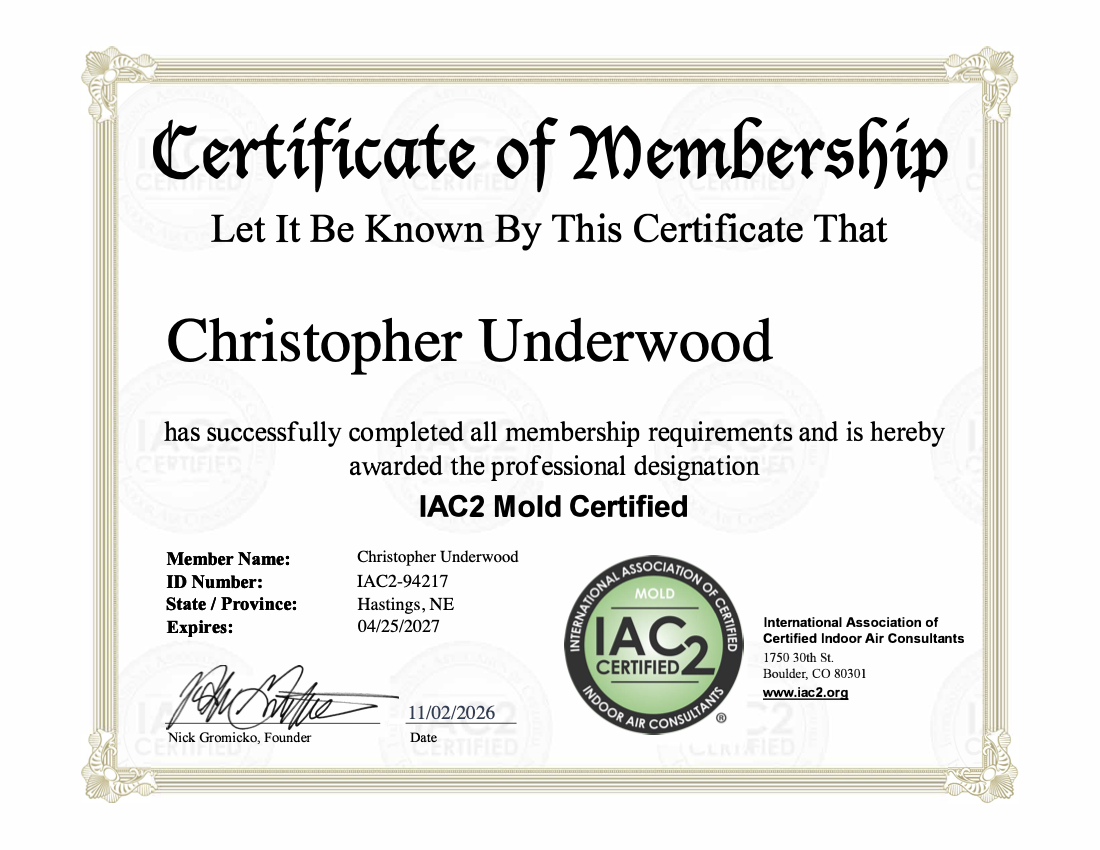
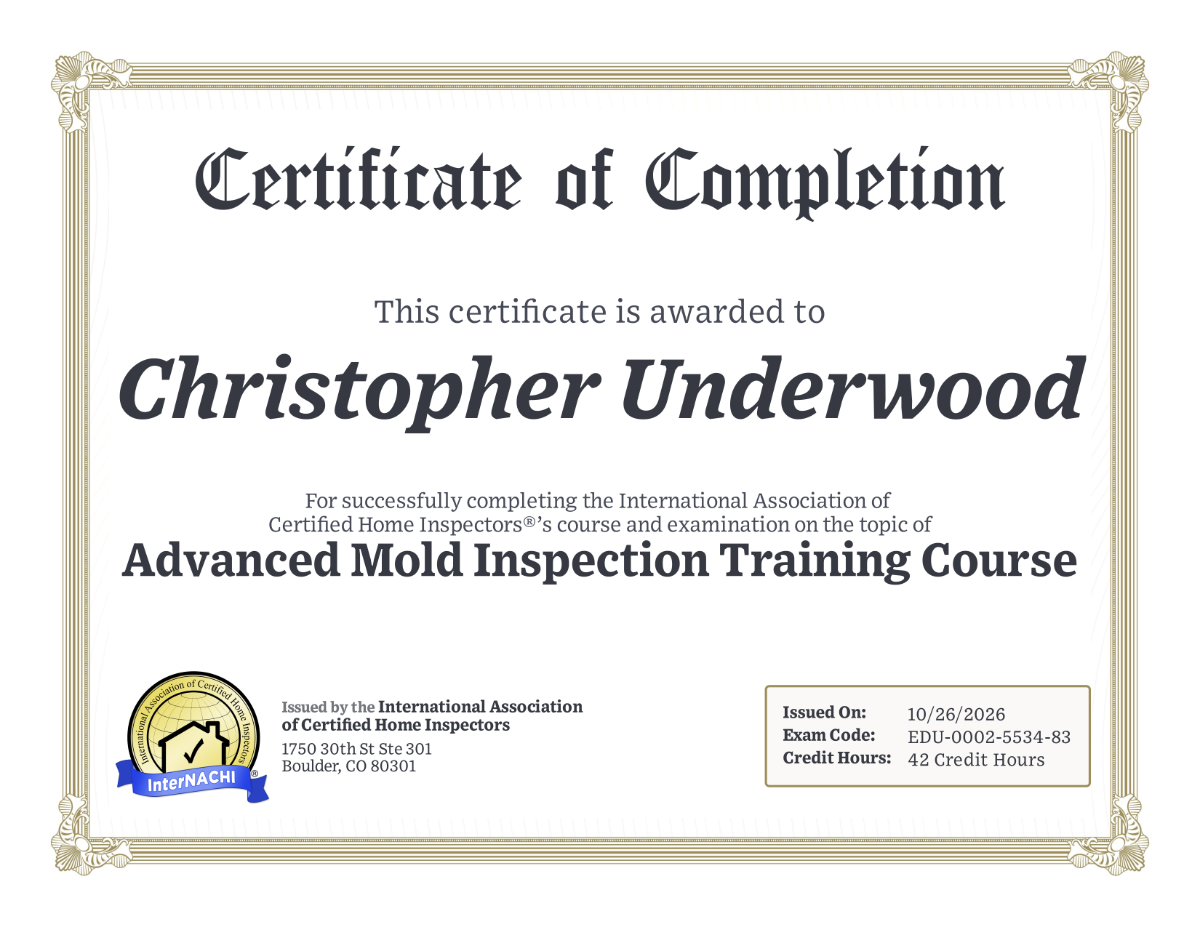
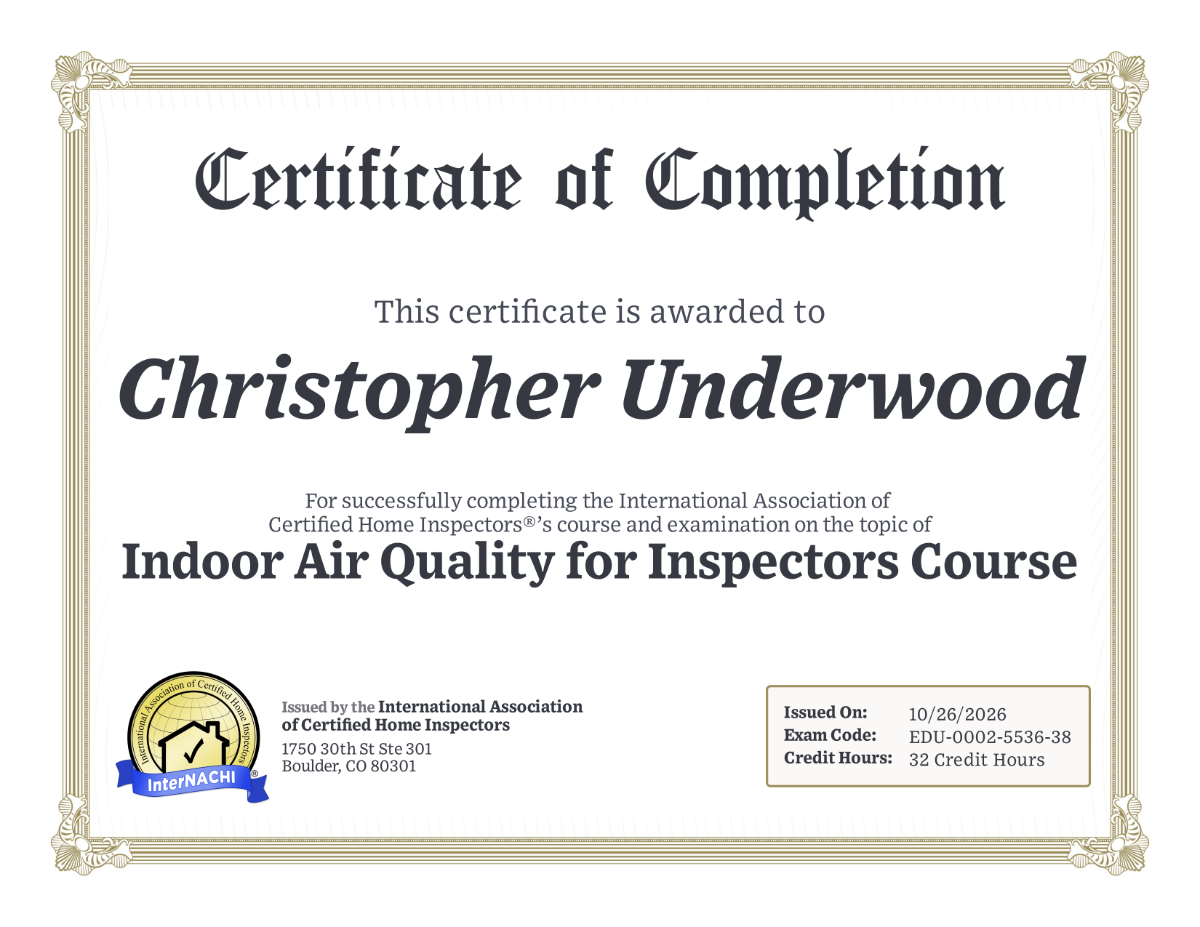
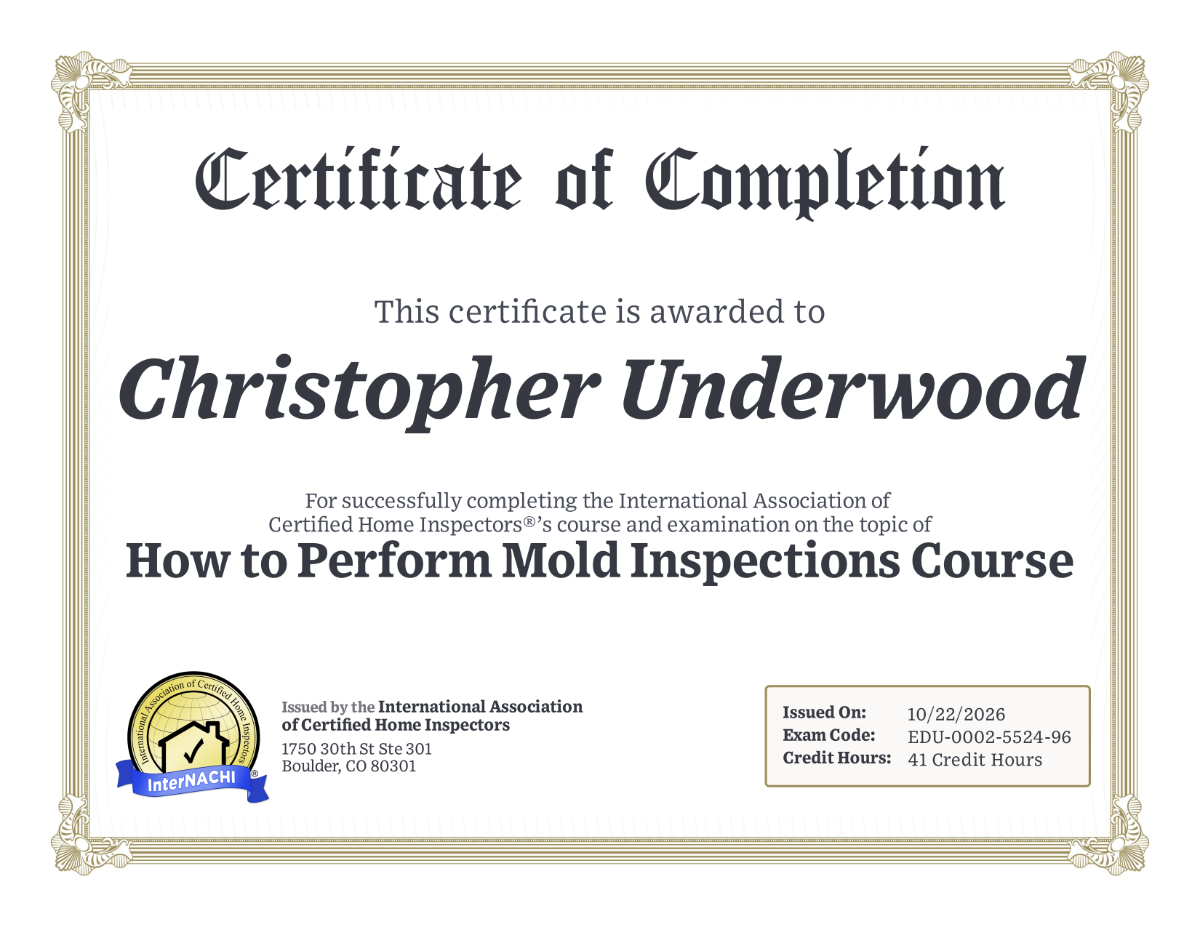
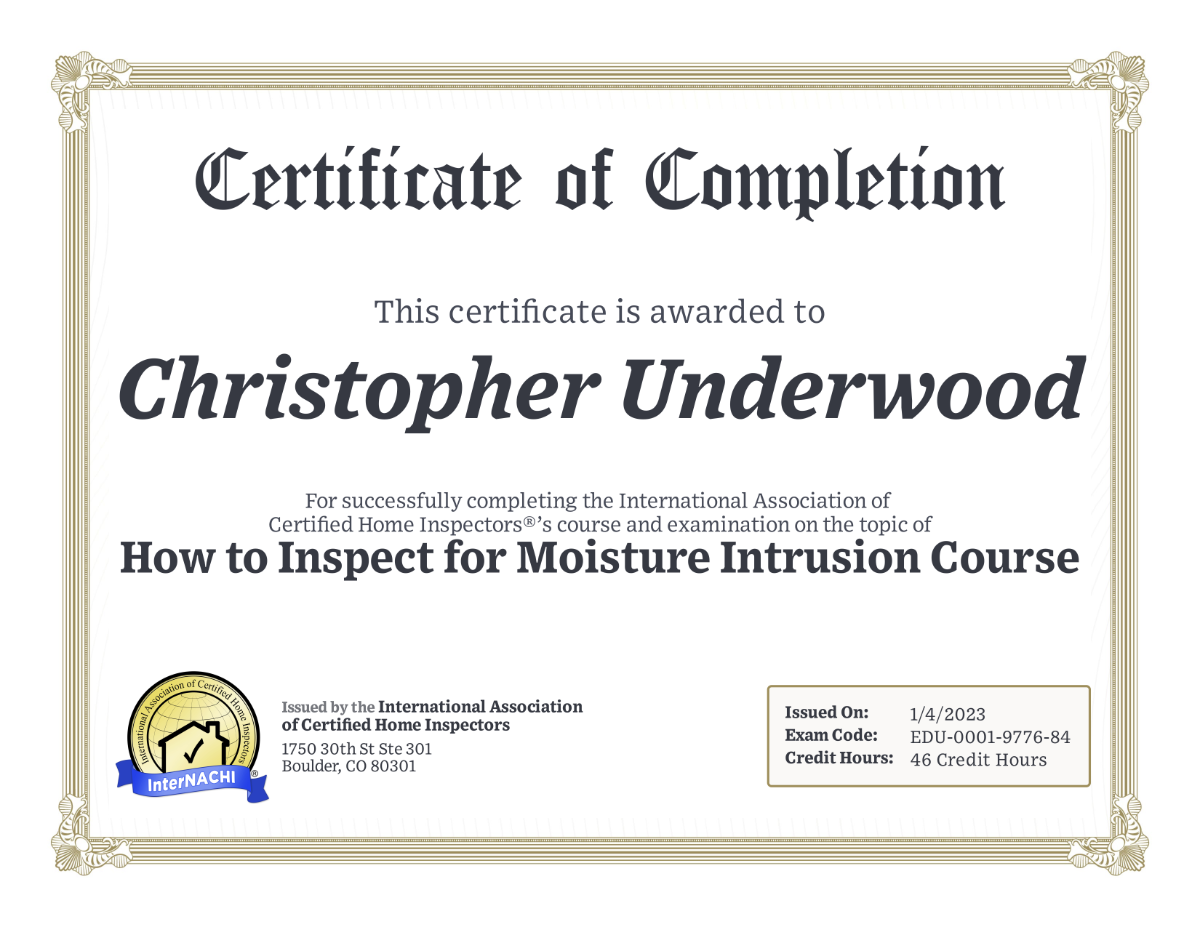
Christopher Underwood is an IAC2-certified mold inspector and InterNACHI Certified Professional Inspector®, with additional certifications in moisture intrusion and indoor air quality.


Christopher Underwood



Musty Smells? Recurring Moisture? Suspected Mold?
We help Nebraska homeowners investigate mold concerns and potential moisture sources that support mold growth. Our service combines an inspection focused on moisture concerns with mold sampling and clear recommendations.
Why We Inspect the Home
Mold needs moisture to grow. We work diligently to investigate your concerns and identify potential moisture sources and conditions that can contribute to mold growth.
We’ve spent years inspecting hundreds of Nebraska homes of all ages using moisture meters and infrared imaging. That experience helps us recognize recurring moisture patterns—from deck attachments and hidden plumbing leaks to poor grading and less obvious sources, such as lint-clogged dryer vent screens that trap moisture and contribute to leaks at duct joints.
What We Inspect
Our mold inspection follows the IAC2 Mold Inspection Standards of Practice, except that we collect one outdoor control air sample instead of two based on our laboratory’s recommendation. We examine readily accessible, visible components:
-
Roof & Drainage: Roof coverings, flashing, penetrations, gutters, and downspouts.
-
Exterior & Grounds: Siding, windows, doors, exterior connections, and grading.
-
Foundation & Lower Levels: Foundation, basement, and accessible crawlspace areas.
-
Heating, Cooling & Ventilation: Visible equipment, filters, ductwork, registers, and condensate components.
-
Plumbing: Visible supply and drain piping, fixtures, and water-heating equipment.
-
Attic: Accessible framing, sheathing, insulation, and ventilation.
-
Interior: Walls, ceilings, floors, windows, doors, and kitchen, bathroom, and laundry ventilation.
This service focuses on mold and moisture concerns and is not intended to serve as a general home inspection.
Tools That Help Us Investigate
-
Moisture Meters & Deep Wall Probes: Check materials for elevated moisture.
-
Infrared Imaging: Highlights temperature patterns that may indicate moisture concerns.
-
Borescope: Provides a view inside walls and other cavities through small openings.
-
Crawlspace Robot: Helps examine areas with limited physical access.
-
Temperature & Humidity Instruments: Help evaluate conditions that may contribute to condensation and mold growth.
-
Breeze ET Pump: Collects air samples for laboratory analysis of mold spores.
Equipment is selected based on your home’s conditions and available access.
Air Sampling & Outdoor Comparison
Our mold investigation includes two indoor air samples and one outdoor comparison sample. Samples are submitted to PriorityLab in Florida for analysis of mold types and spore concentrations.
Differences between indoor and outdoor results may indicate an indoor mold source. We interpret these results alongside moisture readings, visible conditions, and other inspection findings.
Sampling locations are selected based on your concerns, inspection findings, and applicable sampling procedures. If additional samples are recommended, we’ll discuss their purpose and cost with you before collecting them.
Surface & Wall-Cavity Sampling
Swab or tape samples help determine whether suspected surface growth is mold. Wall-cavity air samples may provide additional information when concealed mold is suspected and require separate interpretation from room-air samples.
These samples carry an additional fee. The need for them is determined during the on-site investigation. We’ll discuss the recommended sampling and cost with you before proceeding.
We’ll ask your permission before drilling or creating openings. Repairing openings is not included in our service.
What You Receive
You’ll receive two reports through your online client portal:
-
CNHInspections Report: A web-based report with photographs, inspection findings, recorded moisture, temperature and humidity readings, and recommendations.
-
Laboratory Report: PriorityLab’s analysis of the samples collected during your investigation.
Addressing the Moisture Matters
Cleaning up mold without correcting the moisture source can allow it to return.
Our recommendations address the conditions found—such as leaks, drainage, ventilation, or condensation—to help you understand the underlying concern and recommended next steps.
Understanding the Results
Inspection findings and samples reflect conditions at the time of the visit. They help identify mold and moisture concerns but cannot confirm that a home is mold-free or determine whether mold is causing someone’s symptoms.
For concerns about symptoms or possible health effects, consult a healthcare professional.
Pricing
Based on total square footage, including finished and unfinished basement areas.
-
Up to 3,000 sq. ft. — $499
-
3,001–4,000 sq. ft. — $549
-
4,001–5,000 sq. ft. — $599
-
Over 5,000 sq. ft. — Contact for pricing
-
Crawlspace evaluation — Additional $75
All prices include the mold inspection, two indoor air samples, one outdoor comparison sample, laboratory analysis, and both reports.
Additional sampling costs extra and is discussed before collection. A mileage fee may apply depending on the property’s location.

Schedule your mold investigation using the online scheduler below, or scroll down to send us a question through the inquiry form.
CNHInspections@gmail.com | Call or text: 402-460-0838